Clinical Code-Switching: The Language of Medicine
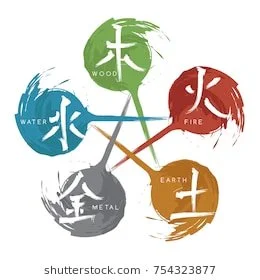
Overlaps in TCM and Neurochemical Explanations of IBS
IBS is the most common functional digestive disorder in the world, and one I see frequently in the clinic. One in five Americans has it. Unfortunately, the majority of them aren’t being treated effectively. I know this because I’ve had scores of patients come to me for help when typical treatments fail. It’s not for lack of trying, of course. The dominant treatment model just isn't well-matched to what IBS actually is.
IBS is not a structural disease. There is no tissue damage, no inflammation visible on colonoscopy, no pathogen to eradicate. This distinction matters because conventional medicine was built for structural problems, and IBS is a functional one. 75% of IBS patients report ongoing symptoms despite medication. They cycle through anything and everything to get relief. Any improvement is often short-lived, or requires a great deal of management.
I wanted to explain IBS through two different lenses: the Traditional Chinese Medicine diagnostic framework, and the Western neuroscientific model. Despite vastly different time scales, language, and methods, it’s striking how similar the conclusions are. The vocabulary is often a sticking point for patients, but in the end both systems are saying the same thing. What’s different is how these conditions are approached and treated.
The TCM Picture: We’re All Just Patterns
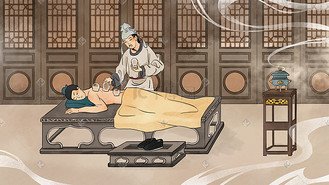
Patients will come to me with a diagnosis they got from their doctor: IBS-D for example. During consultations, they might ask whether acupuncture can treat this or that condition. However, Traditional Chinese Medicine has never approached IBS or any illness as a single condition with a standardized treatment. To a TCM practitioner, "IBS" is a Western administrative category. What matters is the pattern driving each individual's gut dysfunction.
The most common IBS presentation in TCM is Liver overacting on the Spleen. The clinical picture it describes: emotional tension and stress (Liver qi stagnation) directly disrupts digestive function (invades the Spleen), producing cramping, urgency, and alternating stools that worsen under stress and improve with rest. The diagnosis doesn't come from gut symptoms alone, but from looking at the whole picture. Sleep quality, emotional state, tongue morphology, pulse, the exact character and timing of pain, what makes it better or worse, and more. The Liver-Spleen pattern is identified across all of that.
But Liver overacting on Spleen is only one pattern. Differential diagnosis includes Spleen Qi Deficiency (loose stools with fatigue, bloating after meals, poor appetite, a gut that can't keep up with the work of digestion), Spleen Yang Deficiency (cold-pattern diarrhea, always worse in cold or early morning, accompanied by general coldness and low vitality), Damp-Heat in the Large Intestine (urgency, burning, incomplete evacuation, a palpable sense of internal heat), and Liver Qi and Blood Stagnation (fixed cramping pain independent of bowel habit, often with a pronounced psychosomatic component). These are not variations of the same disorder. Patients receive entirely different formulas, different acupuncture point selections, and different dietary guidance based on what the pattern reveals.
The herbal treatments built around these patterns is equally specific. Tong Xie Yao Fang — the classical Pain and Diarrhea Formula — is the primary treatment for the Liver-Spleen pattern. It has been the subject of more rigorous IBS research than almost any other classical formula and has consistently outperformed standard care for IBS-D with stress involvement. Jia Wei Xiao Yao San is the primary formula for IBS with concurrent anxiety, irritability, and mood instability. Ge Gen Huang Lian Tang targets damp-heat presentations, particularly relevant in post-infectious IBS.
The logic of compound formulas is important. These are collections of herbs built into precisely calibrated combinations, refined over centuries of clinical practice, designed to address multiple dimensions of a pattern simultaneously. This is why individualized Chinese herbal medicine consistently outperforms standardized herbal protocols in clinical trials. The formula has to fit the pattern, not just the diagnosis.
The Western Picture: A Nervous System Problem
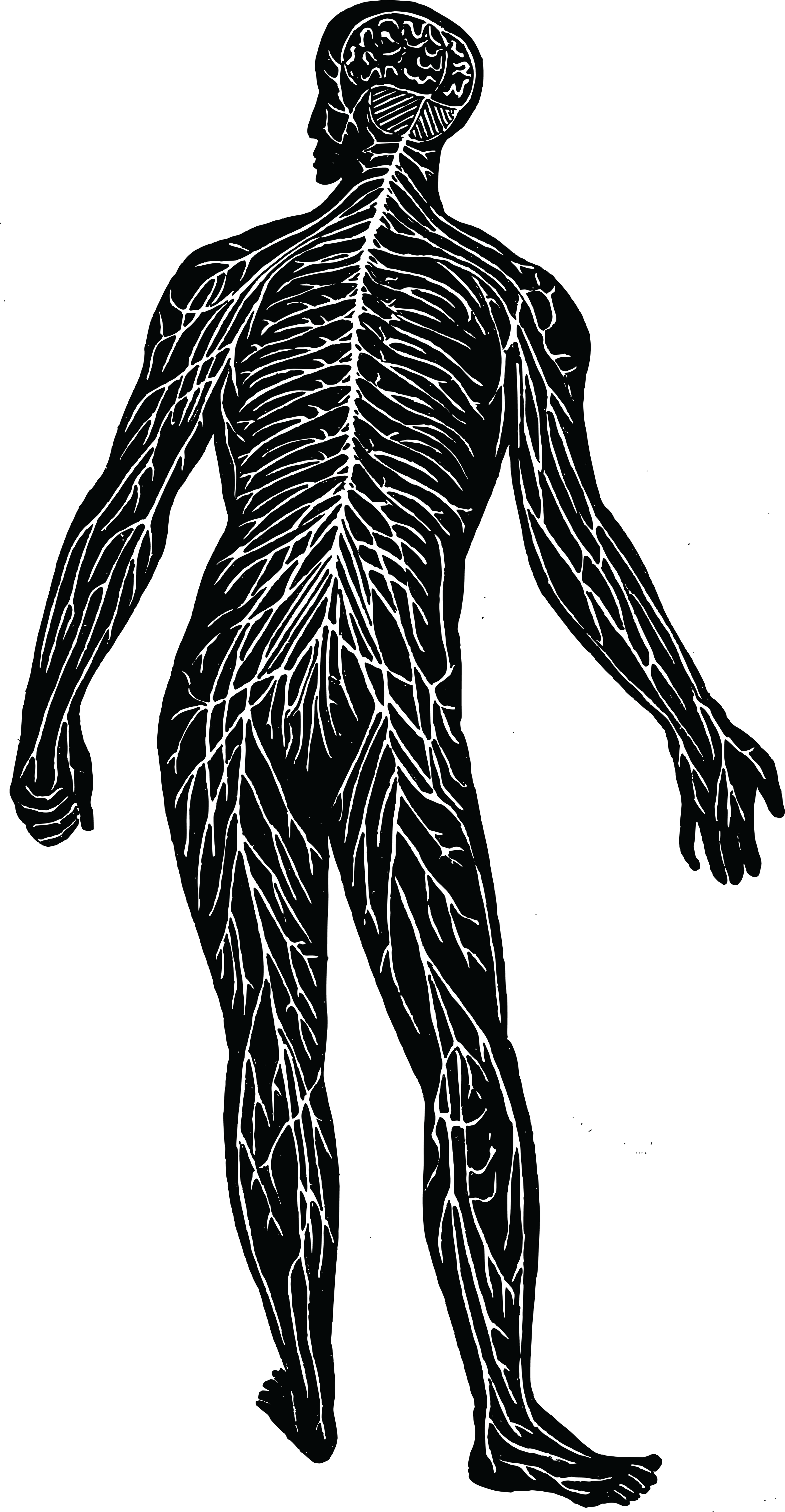
Over the last two decades, there’s been a significant shift in ho IBS is approached in allopathic circles. Research has shown that IBS is not a gut disease, it’s a gut-brain axis disorder. In other words, it’s a lot more complicated than expected.
The enteric nervous system is 500 million neurons organized into an independent neural network lining the GI tract. It communicates with the brain via the vagus nerve and the hypothalamic-pituitary-adrenal (HPA) axis. In IBS, this communication system becomes dysregulated, which results in pain thresholds lowering, motility patterns become erratic, and ordinary gut sensations amplifying into cramping, urgency, and discomfort. This is why stress worsens every IBS subtype. The brain directly governs enteric nervous system behavior, and a dysregulated brain leads to a dysregulated gut.
The mechanism is specific. CRH (corticotropin-releasing hormone) and cortisol released during stress accelerate colonic transit, increase intestinal permeability, and trigger mast cell activation in the gut wall. Meanwhile, 95% of the body's serotonin is produced in the gut where it governs motility, secretion, and pain perception. In IBS-D, excess 5-HT3 receptor activity accelerates transit and amplifies visceral pain; in IBS-C, insufficient 5-HT4 signaling slows it. The vagus nerve continuously reports the gut's state upward, flooding the brainstem with amplified signals that contribute to the anxiety, mood changes, and brain fog that can accompany IBS alongside the GI symptoms.
Pharmaceutical approaches to IBS target single points in this network. Antispasmodics reduce smooth muscle contraction. Loperamide slows motility. Serotonin modulators target specific 5-HT receptors. Each of these can provide symptom relief, and for some patients they do, but they don't address the fundamental dysregulation. The network keeps misfiring, the drug keeps suppressing the symptoms. This is why IBS recurs the moment patients stop treatment, and why so many patients remain symptomatic despite consistent use.
Clinical research supports a different approach. A 1998 JAMA trial by Bensoussan and colleagues found that individualized Chinese herbal medicine significantly outperformed both standardized herbal formula and placebo for IBS symptom relief, with the individually-prescribed group maintaining superior results at 14-week follow-up. A 2012 Cochrane systematic review found acupuncture superior to antispasmodic drugs for IBS symptom severity. A large UK pragmatic RCT the same year showed significant IBS improvement at 3 and 6 months with individualized acupuncture versus standard care alone, with improvements in quality of life and anxiety alongside the gut symptoms. Patients got better, and most importantly stayed in better health with less intervention.
Different Vocabulary, Same Story

A big barrier to convincing people to try TCM is how we, as practitioners, describe issues. Even I feel like some kind of wizard when I start talking to people about qi blockage and constitutional elemental factors. But while it’s the responsibility of physicians to explain things in a way patients understand, at the end of the day we’re saying the same things just with vocabulary from 3000 years ago.
Liver qi stagnation is another way to say HPA axis activation and sympathetic nervous system overdrive. Spleen-Stomach dysfunction corresponds to enteric nervous system dysregulation and reduced gut motility. And let’s be real; all of these sound like something Gargamel would hiss over a bubbling cauldron. Ultimately the clinical picture a TCM practitioner identified by reading the pulse and tongue in 200 BCE and the picture a gastroenterologist reads from gut-brain axis research in 2025 describe the same thing. Different buzz words, with different instruments, but the same findings.
Acupuncture works at every level of this system simultaneously. It modulates HPA axis activity, reducing cortisol and CRH (moving Liver qi). It activates vagal anti-inflammatory pathways, reducing mast cell activation and pro-inflammatory cytokines in gut tissue (clearing damp-heat in the stomach). It normalizes enteric serotonin receptor expression in a bidirectional, homeostatic direction, accelerating slow transit in IBS-C and decelerating fast transit in IBS-D without locking the system into a pharmacological direction (regulating Spleen qi deficiency or stomach excess). It raises visceral pain threshold through endogenous opioid release and dorsal horn modulation in the spinal cord (moves qi congestion in the lower burner).
Chinese herbal medicine adds specificity and provides what a patient may be lacking internally. Paeoniflorin from Bai Shao, berberine from Huang Lian, and gingerols from Sheng Jiang act on the same systems as pharmaceutical drugs and have been long before they were given fancy science names.
Here’s what I’m getting at: the formulas were calibrated by watching the same patterns for centuries and adjusting to what worked. Modern research is now explaining why they work. The traditional framework of identifying a specific pattern and designing treatment accordingly turns out to be comprehensive and effective. It’s the scientific method – hypothesize, test, repeat. For 3000 years.
If you've had IBS for years without lasting relief, the free consultation is where we start. We take a thorough intake, identify your specific pattern, and tell you honestly what we think we can do and how long it's likely to take. No commitment required beyond showing up.
_______________
Sources
Bensoussan A, et al. (1998). Treatment of irritable bowel syndrome with Chinese herbal medicine. JAMA, 280(18), 1585–1589.
Manheimer E, et al. (2012). Acupuncture for irritable bowel syndrome: systematic review and meta-analysis. American Journal of Gastroenterology, 107(6), 835–847.
MacPherson H, et al. (2012). Acupuncture for irritable bowel syndrome: primary care pragmatic randomised controlled trial. BMC Gastroenterology, 12, 150.
Pei L, et al. (2015). Chinese herbal medicine for irritable bowel syndrome: systematic review and meta-analysis. Evidence-Based Complementary and Alternative Medicine.
Konturek PC, et al. (2011). Stress and the gut: pathophysiology, clinical consequences, diagnostic approach and treatment options. Journal of Physiology and Pharmacology, 62(6), 591–599.