
For roughly 550 years, from the Spring and Autumn period (770–476 BCE) through the Warring States (475–221 BCE), the Chinese world was a brawl that began with well over a hundred small states and ended with one.
That is more than half a millennium of generational war, disaster, famine, and chaos. Yet, that same stretch of history produced nearly everything we think of as classical Chinese thought. Far from pondering life’s questions in a dusty library, these philosophers wrote from the front lines. Strife was fertile soil for their ideas, and what grew out of it was craft, invention, and deep self-exploration.
Six distinct methods of thought arose during this period. Some forever changed the philosophical landscape, such as creating the idea of yin and yang, or penning the Art of War. Others – like Moist thinkers – vanished in the aftermath. Each section below tells a story that typifies these systems, then looks at what it reveals about how that school understood conflict. How do these compare to your own ideas about conflict?
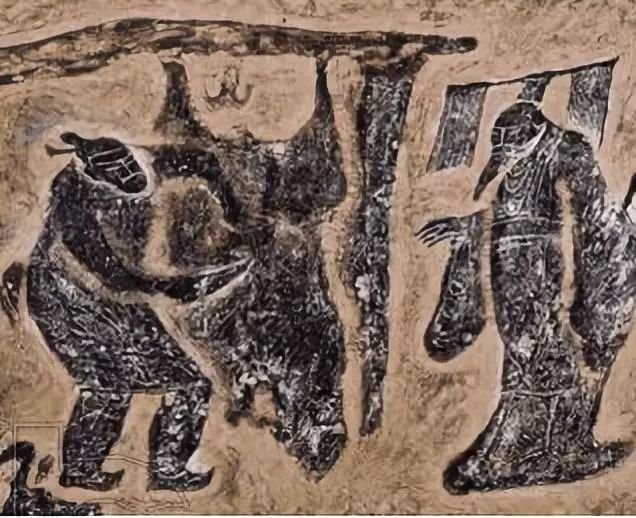
1. The Daoists: Cook Ding Carves an Ox
From the Zhuangzi, chapter 3
Cook Ding was butchering an ox for Lord Wenhui. Every motion came with its own sound, the tearing of hide, the hiss of the blade, and it all landed in rhythm, like the old ceremonial music and dance of the court. The lord was captivated. “Wonderful!” he said. “How is such skill even possible?”
Ding set down his knife. “What I care about is the Way, my lord, and that goes beyond skill. When I first started cutting oxen, all I saw was one huge, solid wall of meat. After three years, I stopped seeing the whole ox. These days I meet it with my spirit instead of looking with my eyes. My senses stand down, and my spirit moves as it likes. I follow the ox’s natural structure, slip the blade into the big gaps, guide it through the hollows, and go wherever the body is already open. I don’t even brush against the tangles of ligament and tendon, never mind the big bones.
“A skilled cook trades in his knife once a year, because he slices. A mediocre cook trades his in every month, because he hacks. This knife of mine is nineteen years old. It has taken apart thousands of oxen. The joints have gaps, and the blade has almost no thickness. Slide something that thin into a space, and there’s plenty of room to move. That’s why it’s still sharp.
“Even so, whenever I reach a knot, I can see it’s going to be hard. So I slow down. I tell myself to be careful, fix my eyes on the spot, and ease my hand along. Then the tiniest movement of the blade, and the whole thing lets go, like dirt sliding off a shovel. I stand there with the knife in my hand, look around, feel pretty good about it, wipe the blade, and put it away.”
Lord Wenhui said, “Excellent! I’ve listened to Cook Ding, and I’ve learned how to nourish life.”
Daoists get a bad rap for being conflict avoidant. Misunderstandings of the ‘go with the flow’ attitude suggest that they just disengage. But Cook Ding doesn’t avoid the hard spot. When he reaches a knot, he slows down, locks in, and works it with the smallest movement possible. What he avoids is bone, the greatest resistance. That’s the difference between the cook who slices and the one who hacks, and it’s the Daoist take on conflict in one line: engage fully with what’s actually there, but don’t pick unnecessary fights with what isn’t. Hacking is unnecessary confrontation. Cutting is knowing exactly where the greatest use of our resources can be utilized.
How many of our conflicts arise or become worse because we try to hack our way through it? How often do we miscalculate resistance as the conflict? Notice how Ding got there: three years before he stopped seeing a whole ox, and only ‘these days’ does he approach the task with his spirit. Conflict was his teacher. Every knot taught him something about the structure underneath, and somewhere along the way the skill transformed into perception. That’s internal cultivation by way of resistance. The goal is to stop wasting your edge on the parts that don’t need cutting.
2. The Confucians: Yan Ying’s Soup
From the Zuozhuan, Duke Zhao, year 20 (522 BCE)
Duke Jing of Qi had come back from a hunt and was relaxing on a terrace with his chief minister, Yan Ying, standing beside him. “Only Minister Ju and I are truly in harmony,” said Duke Jing.
“Ju is simply in agreement with you,” remarked Yan Ying. “How is that harmony?”
“Are they different?” asked the duke.
“They are,” Yan Ying replied. “Harmony is like making a soup. You have water and fire, vinegar, pickled sauce, salt, and plum. The cook blends it all, balancing the flavors, adding and subtracting. A gentleman eats it and his heart settles. Rulers and ministers work the same way. When the ruler says yes to something that has a flaw in it, the minister brings forward the flaw so the plan can succeed. When the ruler says no to something that has merit in it, the minister brings forward the merit so the mistake gets dropped. That keeps government steady, nobody oversteps, and the people have no urge to quarrel. The Book of Songs says: ‘There is a harmonious soup, well seasoned and balanced; when the offering is made, no one speaks, and there is no strife.’
“The ancient kings blended flavors and harmonized tones for the same reason, to settle the heart and complete the work of government. Music works like cooking: clear and muddy, large and small, short and long, fast and slow, sorrowful and joyful, hard and soft, high and low, each one completing the others. A gentleman listens and his heart settles, and a settled heart makes for harmonious character.
“But Ju isn’t like that. Whatever you call right, Ju calls right. Whatever you call wrong, Ju calls wrong. If you add water to water, could you sell it as soup? If a zither played only one note, who would listen? That’s why comformity doesn’t work.”
This is one of Confucianism’s core ideas, harmony without sameness (和而不同). Yan Ying was a Qi statesman and an older contemporary of Confucius, and Confucius later made the line famous in the Analects (13.23). In soup, conflict isn’t the enemy of harmony. On the contrary, it makes the whole meal work. Vinegar, salt, and plum don’t agree with each other, and that’s exactly why the soup is good.
The ruler’s yes needs the minister’s no to become a better yes. That’s innovation by friction. Ideas get sharper when someone pushes on them like a knives on a whetstone. A leader surrounded by echoes is drinking water and calling it soup. There’s an inner side too, since the soup is meant to settle the heart. Being able to hear a no without panicking is real internal work. Speaking up instead of going along takes courage. Put plainly, if everyone in the room agrees with you, you don’t have harmony, you have an echo.
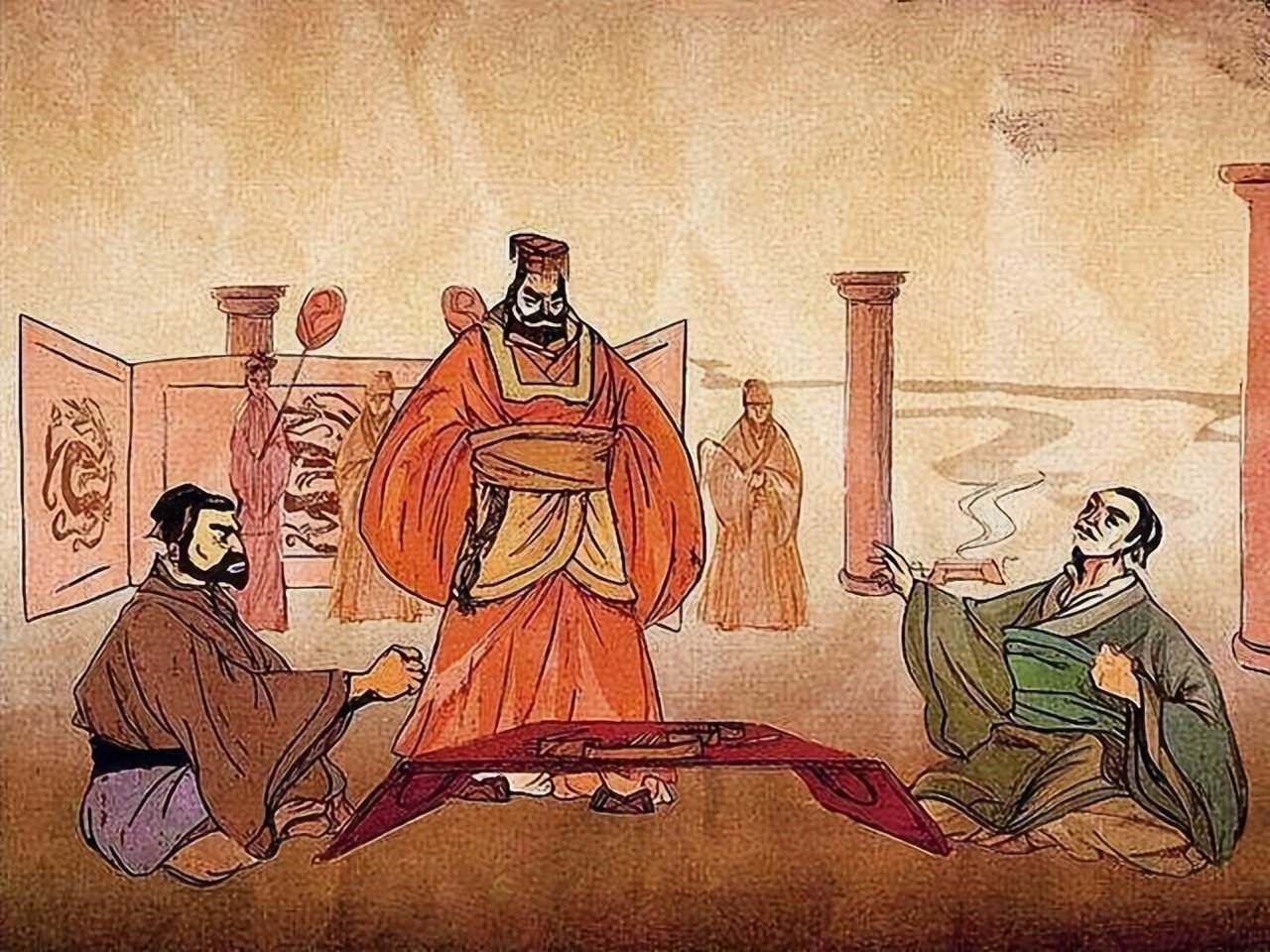
3. The Mohists: Mozi vs. Gongshu Ban
From the Mozi, chapter 50
Gongshu Ban was the best engineer of his age, and he had just finished building new siege ladders for the powerful state of Chu, which planned to attack its small neighbor, Song. Mozi, who was in Qi at the time, heard about it. He set out on foot, walked ten days and ten nights to Ying, Chu’s capital, and went straight to see Gongshu Ban.
“What can I do for you?” the engineer asked.
“Someone in the north has insulted me,” said Mozi. “I’d like you to kill him. I’ll pay you ten gold.”
Gongshu Ban was offended. “I don’t kill people. It’s a matter of principle.”
Mozi stood and bowed twice. “Then let me explain myself. I heard you’re building ladders to attack Song. What has Song done wrong? Chu has more land than it has people. To spend lives you’re short of in order to grab land you don’t need isn’t wise. To attack a state that has done nothing wrong isn’t humane. To know all this and not argue against it isn’t loyal. To argue and fail isn’t strong. You won’t kill one man, but you’ll kill multitudes. That’s not understanding the difference between categories.”
Gongshu Ban was convinced. “Then why not stop?” said Mozi. “I can’t,” said the engineer. “I’ve already told the king.” “Then introduce me.”
Mozi told the king of Chu: “Suppose a man leaves his fine carriage at home and wants to steal his neighbor’s broken-down cart. He leaves his embroidered robes and wants to steal the neighbor’s short jacket. He leaves his meat and rice and wants to steal the neighbor’s husks. What kind of man is that?”
“He must have a thieving disease,” said the king.
“Chu has five thousand li of land. Song has five hundred. That’s the carriage and the cart. Chu has marshes full of rhinos and deer, and rivers full of fish and turtles, the richest in the world. Song doesn’t even have pheasants, rabbits, or carp. Chu has tall pines and catalpas and camphor trees. Song has no big timber. That’s meat and husks, embroidery and a short coat. I think attacking Song is the same disease.”
“Well said,” said the king, “but Gongshu Ban has already built the ladders for me. I’m taking Song.”
So Mozi asked for a demonstration. He unbuckled his belt and laid it on the ground as a city wall, and used wooden tablets as weapons. Gongshu Ban ran through nine different attacks, and Mozi turned each one aside. Gongshu Ban ran out of attacks. Mozi still had defenses to spare. Gongshu Ban said, “I know how to beat you, but I won’t say.” Mozi said, “I know how you plan to beat me, and I won’t say either.”
The king asked what they meant. “Gongshu Ban’s idea is to kill me,” said Mozi, “so that Song has no defender. But my disciple Qin Guli and three hundred others already have my defensive devices on Song’s walls, waiting for Chu’s army. Kill me, and you still can’t kill them.”
The king of Chu said, “Fine. Let’s not attack Song.”
Mohists believed that everyone is intrinsically good and has the right to prosper. Gongshu Ban won’t kill one man for gold but will build machines to kill thousands. The king calls a man who steals without need diseased while planning the same thing to a whole country. Mozi’s point is that murder and theft don’t become virtue when you scale them up. It proves the Mohist diagnosis of conflict: partiality. We weigh our own interests heavier than everyone else’s. The cure is what Mozi called impartial care, giving other people’s lives the same weight as your own. It’s a policy of compassion.
Mohists were logicians, inventors, and engineers. Pragmatic, logical pacifists known for impenetrable military defenses. They believed that conflict was not something to be sought out, but was important in defense of principles. Seeing the big picture and respecting the lives of others as much as your own puts conflict into context. That’s resolve in the face of conflict.
4. The Legalists: Shang Yang Moves the Pole
From the Shiji (Records of the Grand Historian), chapter 68
A minister named Shang Yang was tasked by Duke Xiao of Qin to revise the state’s laws. The new code was ready, but the people of Qin had no reason to trust that the government would abide by their own rules.
So he had a wooden pole set up at the south gate of the capital’s marketplace. He announced that anyone who could move it to the north gate would get ten pieces of gold. People were skeptical. He raised the reward to fifty. Finally one man hauled the pole over, and Shang Yang paid him fifty gold on the spot, to show there was no trick. Then he issued the laws.
For a year, there was strife. Thousands of people came to the capital to complain that the new rules were unworkable. Then the crown prince broke the law. Shang Yang said, “The laws fail because the people at the top break them.” But you can’t punish the heir to the throne, so he punished the prince’s tutor and branded the face of the prince’s teacher, Gongsun Jia. The next day, everyone in Qin was suddenly eager to follow the law.
Ten years on, the people were delighted. Nobody picked up what someone dropped on the road, the mountains had no bandits, every family had enough. Qin’s people were brave in public wars and timid in private feuds, and the villages were well run.
Legalism starts from the cold premise that people follow incentives, and conflict comes from competing interests in a world without enough to go around. You can’t lecture it away. You design a system where the incentives point the right way. The pole was about credibility. A law nobody believes is just noise, so Shang Yang buys trust. The prince’s tutors are about the other pillar, equal enforcement. And the last line is the thesis: Legalism doesn’t try to end conflict, it aims it. People are self-interested and profit driven, conflict is unavoidable – create systems to mitigate it. Aggression gets rewarded when it serves the state and punished when it doesn’t. That’s owning conflict.
A century later, Han Feizi, a prince of the state of Han and a student of the Confucian Xunzi, built all this into a full theory: law (法), the standards everyone can see; technique (術), the ruler’s methods for managing his own officials; and position (勢), the authority of the seat itself, so the system works even with a mediocre ruler. His bet was that you shouldn’t build a state on the rare saint.
Legalism won the war. The Warring States period ended with Qin consolidating all of China and creating the first dynasty. A dynasty which collapsed 15 years later. It – perhaps predictably – fell to corruption and in-fighting. But the principle should be familiar: the idea that a state can run on public, predictable rules that applied to everyone, instead of the whims of the powerful.
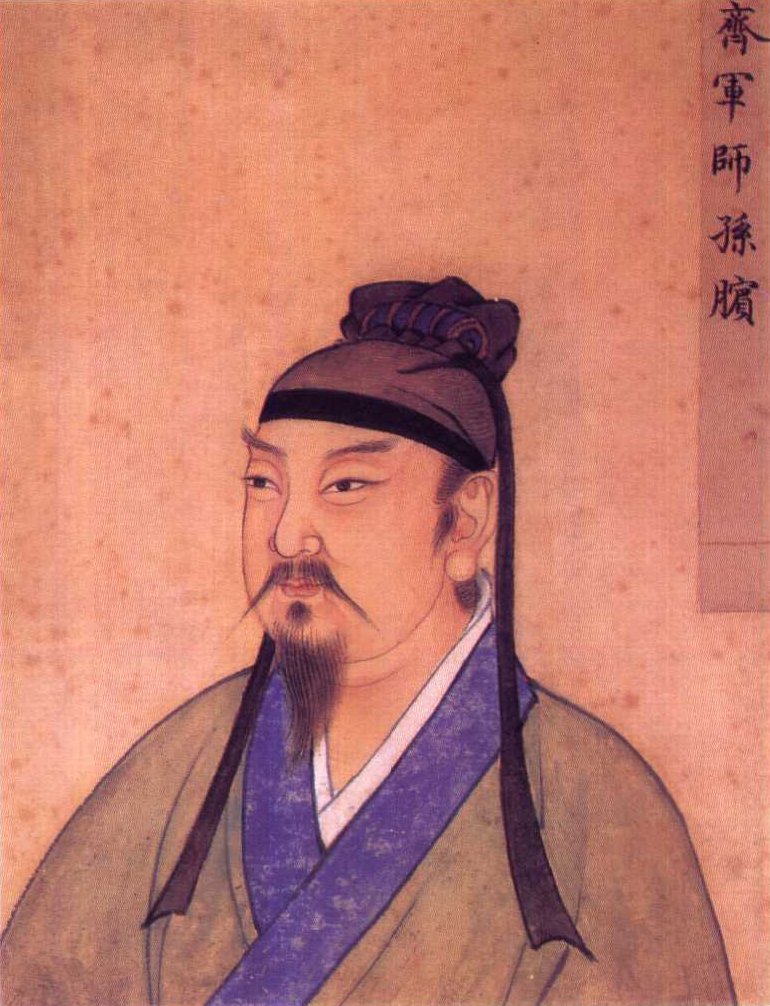
5. The Strategists: Sun Bin Besieges Wei to Rescue Zhao
From the Shiji, chapter 65
Sun Bin and Pang Juan studied the art of war together. Pang Juan left first and landed a general’s post in the state of Wei. He knew in his gut that Sun Bin was the better strategist, and it ate at him. So he invited his old classmate to Wei, framed him, and had his feet cut off and his face tattooed so he’d be too ashamed to ever be seen in public.
An envoy from Qi came to Wei, and Sun Bin, now a convict, managed a secret audience. The envoy was impressed enough to smuggle him back to Qi in a carriage. There, the general Tian Ji took him in as an honored guest.
In 354 BCE, Wei attacked Zhao and laid siege to its capital, Handan. Zhao begged Qi for help. The king of Qi sent Tian Ji as commander of his armies, and Sun Bin rode in a covered carriage as his strategist. Tian Ji’s instinct was to march straight for Zhao.
“Don’t,” said Sun Bin. “If you want to untangle a knot of threads, you don’t grab it with clenched fists. If you want to break up a brawl, you don’t join in the punching. You press on the weak point, and when the fighters are checked and can’t advance, they come apart on their own. Right now Wei and Zhao are hammering each other. Wei’s best troops are out in the field, which means the old and the tired are guarding home. Don’t march to Zhao. Race to Daliang, Wei’s capital, seize the main roads, and hit the place that’s empty. Wei will have to drop Zhao to save itself. We lift the siege in one move, and we wear Wei out on the way back.”
Tian Ji did it. Wei abandoned Handan and raced home, and Qi met its army at Guiling and crushed it.
Thirteen years later, Sun Bin settled the old score. He lured Pang Juan into a narrow pass at Maling by having Qi’s camps light fewer and fewer cooking fires, night after night, as if the soldiers were deserting. Pang Juan swallowed it, dumped his infantry, and pushed ahead with his fastest troops. In the dark he found a tree stripped white and carved with his own name, lit a torch to read it, and ten thousand crossbows fired. He cut his own throat. “So,” he said, “I’ve made that punk famous.”
First of all, that story is metal as hell. Just pointing it out.
The strategists treat conflict as a craft: a problem of information, terrain, timing, and cost, where the best victory is the one that costs the least. Notice that Sun Bin’s response isn’t to avoid conflict with Wei. Qi still fights at Guiling. The difference is that Qi picks the place and the moment, and the enemy comes to it. Don’t wade into the brawl, don’t pull on the knot with both fists, go for the empty spot. If that sounds familiar, it should. It’s Cook Ding’s knife in the gaps, scaled up to armies.
But the real story is the man. Pang Juan crippled Sun Bin to make him disappear, and it did the opposite. A man who could no longer march at the head of an army became the greatest strategist of his age, because he had to win by thinking. That’s the thesis: the injury closed one door and forced him to find another. Sima Qian, who suffered a ruinous punishment of his own, listed Sun Bin among the people whose best work came out of disaster. That’s trial by fire.
6. The School of Names: Deng Xi and the Drowned Man
From the Lüshi Chunqiu, chapter 18.4
One year the Wei River flooded, and a member of a rich man’s household drowned. Someone fished out the body and refused to give it back without a huge payment. The rich man, alarmed, went to Deng Xi for advice. Deng Xi said, “Relax. He can’t sell it to anyone else.”
The finder, now worried that nobody else would pay, also went to Deng Xi. Deng Xi told him the same thing: “Relax. They’ve got no one else to buy it.”
The School of Names was obsessed with the relationship between names and reality, and Deng Xi’s trick shows why that matters in a fight. Two parties, both given sound advice despite the fact it was polar opposite. Both men believed they had leverage. Conflict, to this school, is largely a contest of words and meaning. Power is the one who defines.
Sima Tan’s verdict was that the Names thinkers pick things apart so finely that people lose the point, but that checking names against reality is something you can’t afford to skip. That’s looking for truth in conflict. Operating on different meanings and standards turns a dispute into a hostage standoff. Forcing the question of what words actually refer to is how law got sharper, and Deng Xi’s fight with the state produced a code the state itself ended up using. Whoever controls the definitions controls the fight.
Your Flavor of Indignation
Look at what each story produced. A craftsman’s perception, a better soup, a better defense, a new kind of state, a strategist who rebuilt himself after ruin, a sharper definition. Sima Qian, the son of the historian who sorted the six schools, wrote that the great works of history mostly came from people in trouble: Confucius in distress, Qu Yuan in exile, Sun Bin with his feet cut off. He called it writing out of indignation. Strife as soil.
It’s so interesting to me how much evolved from this very dark period. The breadth of experiences that spoke to enough people so that whole philosophical systems were born. I invite you to consider your style of engaging conflict, whether any align with these ancient thinkers. We’re beset by conflict all the time; at home, in the office, as large as a country and as small as a family. In our own Warring States era, which school do we belong to?
Sources: Zhuangzi ch. 3; Zuozhuan, Duke Zhao year 20; Mozi ch. 50; Shiji chs. 68 and 65; Lüshi Chunqiu ch. 18.4; Zuozhuan, Duke Ding year 9. Stories retold from the Chinese originals; Sima Tan’s remarks on the schools are from his essay preserved in Shiji ch. 130.