Miami Acupuncture & Herbal Solutions
The Answer to
Low Back Pain & Sciatica
Care that provides relief whether the injury is new or long-standing.
Understanding the Problem
If Back Pain Keeps Coming Back, You Need a Better Option
One wrong move, a tough day at the gym, sleeping wrong, a car accident... There are many ways back pain starts, but the standard method of care never changes. Pain killers, muscle relaxants, rest. If that doesn't work, injections. Still in pain? Well, surgery is your only option.
Except there's another choice. The American College of Physicians recommends acupuncture for acute and chronic low back pain, alongside exercise, lifestyle adjustment, and movement practices like tai chi.1
We combine acupuncture, massage, cupping, electro-stimulation and movement practices with an honest assessment of what is driving your pain, a clear plan, and measurable checkpoints, so you know whether it is working.
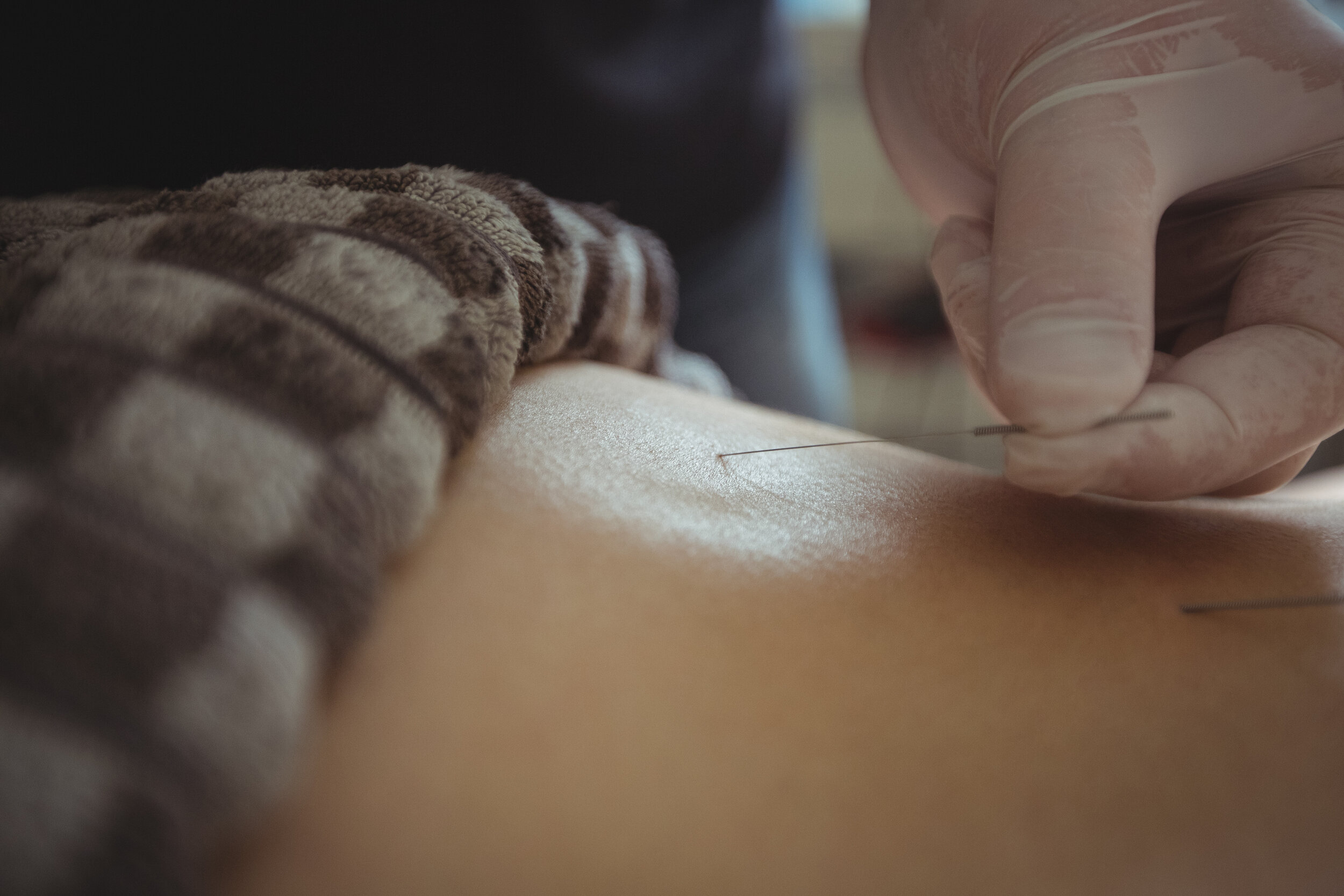
The Science Behind the Needles
How to Calm an Angry Back
A strength of TCM is its ability to target many causes of back pain simultaneously, and address pain through many systems. Pain is often the cause of many confounding factors, and traditional physicians are trained to identify and address them all.
Muscle & Trigger Point Release
Back and sciatic-type pain often involves tight paraspinal, gluteal and piriformis muscle. Needling these tissues can reduce guarding and the pain they refer into the hip and leg.
Pain Signal Modulation
Acupuncture alters how the spinal cord and brain process sensation, turning down the amplification that makes pain feel worse.
Nervous System Calming
Treatment shifts the body toward a parasympathetic, rest-and-repair state. Chronic pain and stress feed each other, and breaking that loop can matter as much as treating the spine.
Local Circulation & Inflammation
Acupuncture increases local blood flow and influences inflammatory signaling around irritated tissue, which is one reason for relief when a disc or nerve root is involved.
Restored Movement
Less pain makes it easier to do the things that actually rebuild a back: walking, strengthening, and mobility work. We pair treatment with movement guidance, including tai chi and qigong principles.
Conditions We Address
Effective Therapy for
Any Stage
Back pain is not one condition, and it can change over time. Acupuncture and herbal medicine addresses the patient as they are with each visit, evolving with the condition.
Chronic Low Back Pain
Pain lasting more than 12 weeks with no single structural cause. These patients have often tried everything to no avail. Chronic cases involve entrenched patterns that need to be identified and corrected.
Protocol: structural retraining and pattern interruptionSciatica from Nerve Compression
Pain, tingling or numbness traveling below the knee. This can come from nerve impingement in the back, glute, or hip. Treating every part of the chain is integral.
Protocol: Inflammation control and nerve protectionAcute & Subacute Flare-Ups
Acupuncture, cupping, electro-stimulation and massage are employed to prevent acute flares from becoming chronic. A plan of care is developed to reduce the frequency of attacks.
Protocol: Relax muscles and hasten recoveryPiriformis & Deep Gluteal Pain
Pain that originates in the hip rotators rather than the spine which can mimic sciatica. Often seen in athletes like bikers and runners, as a consequence of overtraining and/or limited mobility support.
Protocol: Release tension and activate dormant musclesDegenerative & Stenosis-Related Pain
Age-related changes that narrow the spinal canal. These conditions are often difficult, requiring careful consideration of lifestyle. Systems must be designed for at-home maintenance and care to reduce discomfort.
Protocol: Symptom relief and systems trainingBack Pain That Limits Daily Life
Sitting, driving, sleeping, lifting a child or a grocery bag. We track what you can do again, because that is the outcome that counts.
Protocol: evaluation and return to functional healthWhat the Research Shows
Evidence-Based Care,
Ancient Roots
Research into the use of acupuncture and traditional Chinese medicine for the treatment of these conditions began in the 1970s. Decades later, the results are clear; these methods produce long-lasting results, even and especially when standard methods have stopped working.
The ACP's guideline on non-drug treatment of low back pain recommends acupuncture as an option for chronic low back pain.1
An individual-patient meta-analysis of 39 trials and 20,827 patients found acupuncture outperformed both sham needling and no acupuncture for chronic musculoskeletal pain, including back pain. Effects persisted at 12 months.2
In a blinded trial of 216 adults with chronic sciatica from a herniated disc, ten sessions of acupuncture reduced leg pain about twice as much as sham at week four, and the gap remained at 52 weeks. Disability scores improved more as well.3
A meta-analysis of 30 randomized trials and 2,662 participants found acupuncture effective and safe for sciatica compared with medication and other controls.4
14 randomized controlled trials with 1560 patients, comparing modified herbal medicine versus diclofenac found the total effective rate was nearly 20% better than the NSAID. On subjective pain scales, it beat Western medicine by a mean difference by between 10% to 20%7
What to Expect
Your Treatment
Journey
Care is a collaboration. At Miami Acupuncture and Herbal Solutions, we treat every patient as a unique constellation of factors, where wellness is care for the whole person.
Free Consultation
We review your history, your pain pattern, and any imaging or specialist notes you bring, then talk through whether this approach fits. By the end, you have a clear plan of care.
Hands-On Assessment
We test movement, strength, reflexes and nerve tension, and add TCM diagnosis through pulse, tongue and palpation. If something needs a physician, we refer you.
Active Treatment
Acupuncture, with electroacupuncture, cupping or Tui Na added as indicated. The frequency of treatments depends on how impactful the condition is to your daily life.
Movement & Home Care
Specific guidance on posture, walking, gentle strengthening and self-care between visits, so the gains persist and improve exponentially.
Reassess with Data
We agree on a few measurable markers up front, such as pain rating and what you can do again, and review them after the first several visits. If it isn't helping, we change course.
Seek urgent medical care first if you have:
Loss of bladder or bowel control, numbness in the groin or inner thighs, leg weakness that is getting worse, fever with back pain, or back pain after significant trauma. These signs need same-day evaluation.
Founder & Chief Physician
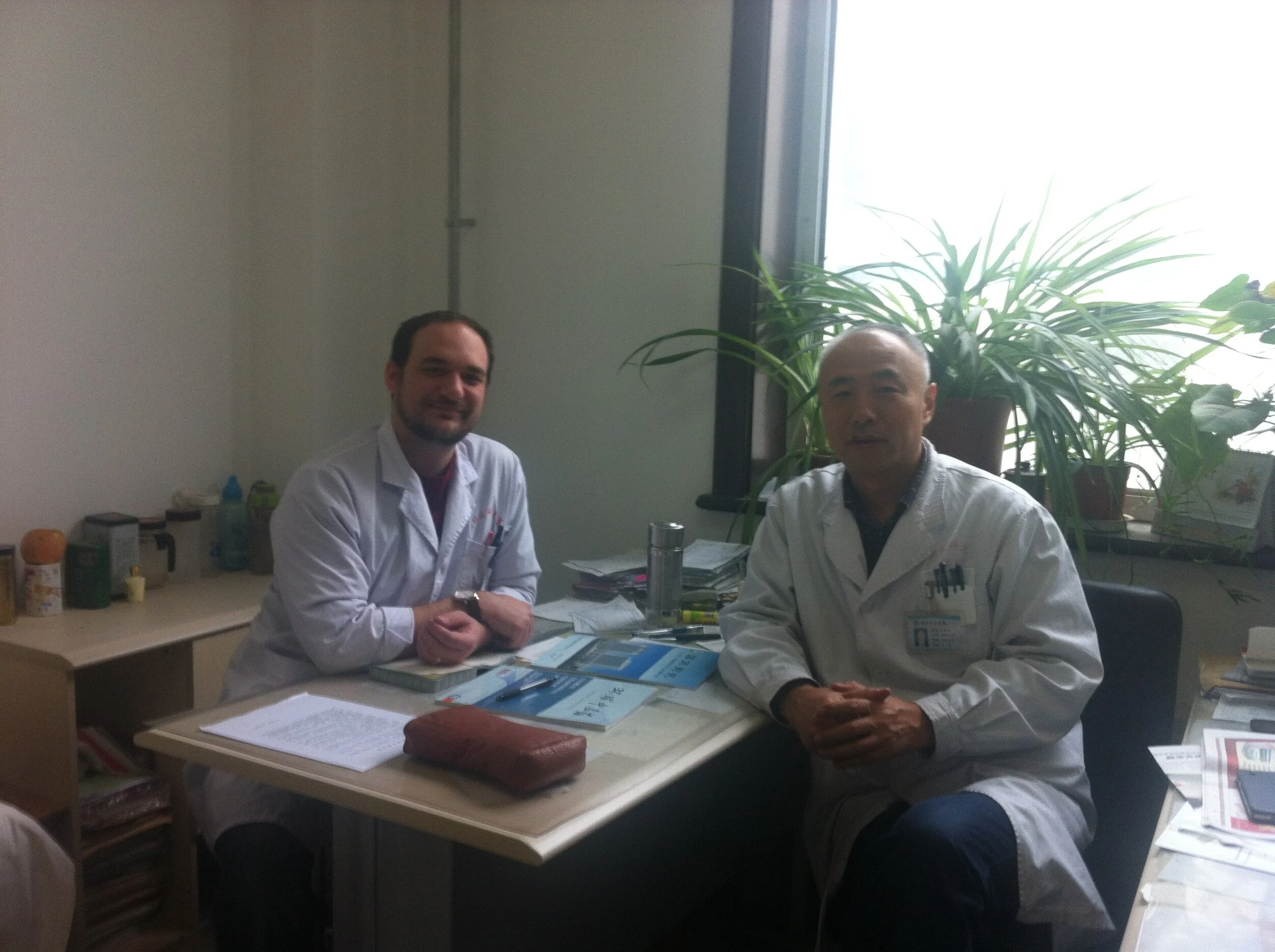
Meet Blake Estape
- L.Ac.
- Dipl.O.M. (NCCAOM)
- Miami Native
Blake came to acupuncture as a patient, suffering from severe neck pain and headaches. Consistent treatment, along with tai chi and kung fu, resolved them.
He then spent a decade in China, studying at Hebei Medical University and immersing himself in the theories and realities of Chinese medicine. His training included hospital internships, with rotations in Western specialties including orthopedics, neurology, and gastroenterology. There he worked alongside physicians to treat conditions ranging from musculoskeletal trauma, to stroke, to numerous GI issues. In 2015, Blake returned to Miami with the intention of bringing the wisdom of China's health culture to his hometown.
That background shapes how we approach back pain: a thorough screening, meaningful time with your physician, and data-informed care that considers every aspect of a person. Read Blake's full story.
Common Questions
Frequently Asked
Questions
Ready to Find Out
How Acupuncture Can Help?
Your first consultation is free. Bring any imaging or notes you have, and we'll build a plan around your pain.
Book Your Free Consultation7700 N. Kendall Drive, Suite 510, Miami, FL 33156
(786) 514-3942
References
- Qaseem A, Wilt TJ, McLean RM, Forciea MA. Noninvasive treatments for acute, subacute, and chronic low back pain: a clinical practice guideline from the American College of Physicians. Ann Intern Med. 2017;166(7):514-530. doi:10.7326/M16-2367
- Vickers AJ, Vertosick EA, Lewith G, et al. Acupuncture for chronic pain: update of an individual patient data meta-analysis. J Pain. 2018;19(5):455-474. doi:10.1016/j.jpain.2017.11.005
- Tu J, Shi G, Yan S, et al. Acupuncture vs sham acupuncture for chronic sciatica from herniated disk: a randomized clinical trial. JAMA Intern Med. 2024;184(12):1417-1424. doi:10.1001/jamainternmed.2024.5463
- Zhang Z, Hu T, Huang P, et al. The efficacy and safety of acupuncture therapy for sciatica: a systematic review and meta-analysis of randomized controlled trials. Front Neurosci. 2023;17:1097830. doi:10.3389/fnins.2023.1097830
- Chan MWC, Wu XY, Wu JCY, Wong SYS, Chung VCH. Safety of acupuncture: overview of systematic reviews. Sci Rep. 2017;7:3369. doi:10.1038/s41598-017-03272-0
- Shurtleff, David. “Low-Back Pain and Complementary Health Approaches: What You Need to Know.” Nccih, 2017National Center for Complementary and Integrative Health
- Xiong, Zhencheng, et al. “Efficacy and Safety of Modified Duhuo Jisheng Decoction in the Treatment of Lumbar Disc Herniation: A Systematic Review and Meta‐Analysis.” Evidence-Based Complementary and Alternative Medicine, vol. 2020, no. 1, Jan. 2020, 10.1155/2020/2381462. National Institute of Health